Endoscopic Sleeve Gastroplasty vs. GLP-1 Medications: How to Compare Your Options
For many people living with obesity, the treatment landscape has changed quickly. Endoscopic sleeve gastroplasty, often called ESG, offers a minimally invasive procedure that reduces stomach volume without external incisions. At the same time, GLP-1 and dual-incretin medications such as semaglutide and tirzepatide have become widely discussed options for medical weight management.
If you are researching ESG in Mexico or another destination abroad, you may also be wondering whether medication could be a better first step, whether ESG and medication can be combined, or how to compare the long-term commitment of each option. The right answer depends on your health history, weight-related conditions, prior weight-loss attempts, access to ongoing care, and personal preferences.
This article is educational and not a substitute for medical advice. A qualified obesity medicine clinician, gastroenterologist, or bariatric specialist can help you evaluate which approach is appropriate for you.
Key takeaways
- ESG is an endoscopic procedure that uses sutures to reduce the size and shape of the stomach, helping many patients feel full sooner.
- GLP-1 and related medications work through hormonal pathways that affect appetite, fullness, digestion, and blood sugar regulation.
- ESG is typically a one-time procedure with follow-up care, while medications require ongoing prescriptions and monitoring to maintain benefits.
- Some patients may use ESG and medication together, but combination therapy should be planned by a qualified clinician.
- Risks, costs, recovery time, and travel logistics differ significantly, especially for patients considering care abroad.
- Neither ESG nor medication guarantees a specific amount of weight loss. Long-term success usually depends on nutrition, physical activity, sleep, mental health support, and medical follow-up.
What is endoscopic sleeve gastroplasty?
Endoscopic sleeve gastroplasty is a non-surgical bariatric procedure performed through the mouth using a flexible endoscope. The clinician places a series of internal sutures in the stomach to create a narrower, sleeve-like shape. Unlike laparoscopic sleeve gastrectomy, ESG does not remove part of the stomach and does not require abdominal incisions.
The procedure is usually performed under general anesthesia or deep sedation in a hospital or accredited endoscopy setting. Most patients go home the same day or after a short observation period, depending on the facility, anesthesia plan, and individual health factors.
ESG is intended to support weight loss by reducing how much food the stomach can comfortably hold and by slowing stomach emptying in some patients. It is not simply a mechanical restriction, however. Weight regulation is complex, and outcomes are influenced by biology, behavior, medications, and follow-up support.
ESG may appeal to people who want a less invasive option than bariatric surgery or who do not meet criteria for surgery but have struggled with lifestyle changes alone. It still requires a serious commitment to dietary progression, follow-up visits, and long-term behavior change.
What are GLP-1 and dual-incretin medications?
GLP-1 receptor agonists and related medications are prescription drugs used for diabetes care and, in specific formulations or doses, chronic weight management. Examples include semaglutide and liraglutide. Tirzepatide acts on both GIP and GLP-1 pathways and is sometimes described as a dual-incretin medication.
These medications may help with weight management by:
- Increasing feelings of fullness
- Reducing appetite and food cravings for some patients
- Slowing stomach emptying
- Improving blood sugar regulation in appropriate patients
- Affecting brain pathways involved in hunger and satiety
They are usually taken as injections on a weekly or daily schedule, depending on the medication. Dosing is often increased gradually to reduce side effects. Patients need medical screening, prescription access, and ongoing monitoring.
Medication can be an important tool, but it is not a short-term detox or quick fix. Many patients regain weight after stopping therapy, especially if no other long-term strategy is in place. Insurance coverage, availability, side effects, and cost can also influence whether medication is sustainable.
ESG vs. GLP-1 medications: how they differ
ESG and GLP-1 medications are both used in obesity care, but they are not interchangeable. They differ in how they work, how they are maintained, and what kind of follow-up they require.
Mechanism
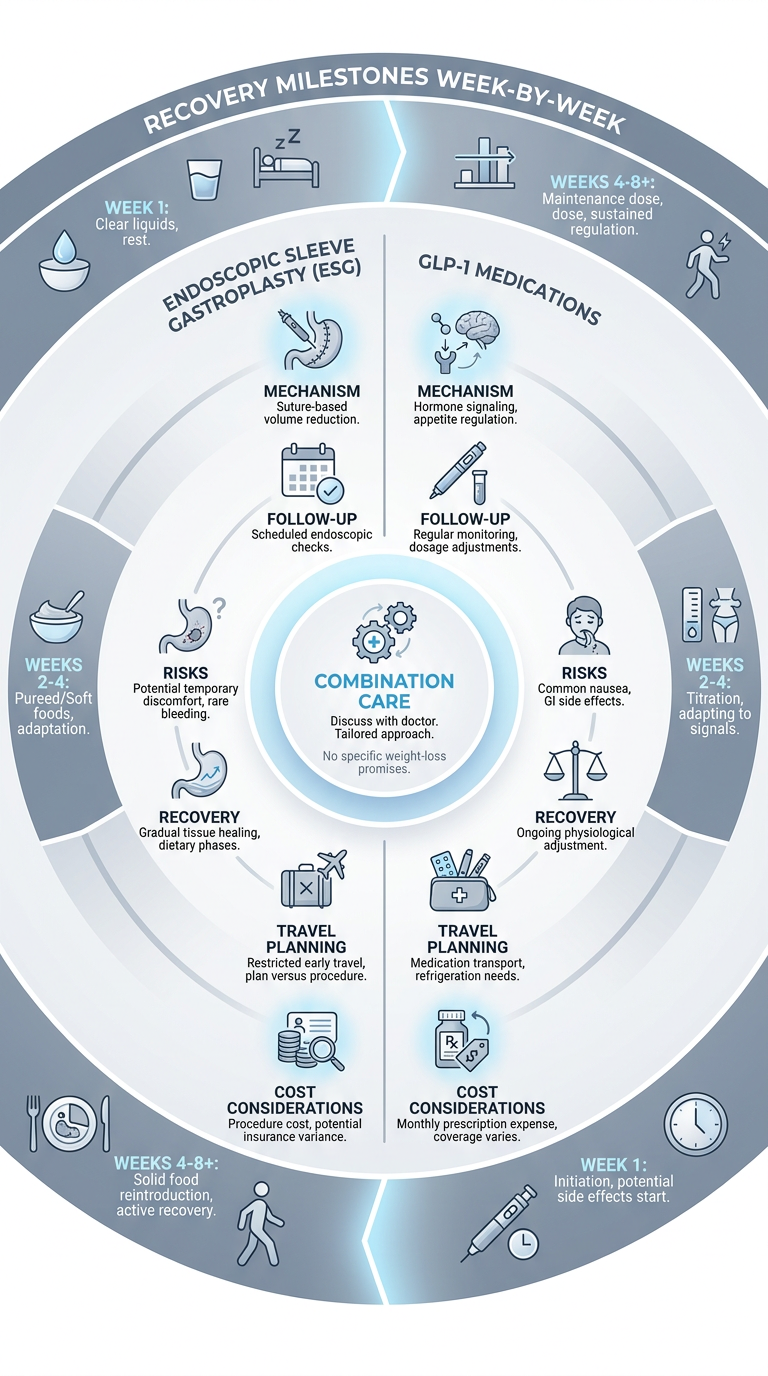
ESG changes the stomach anatomy internally by placing sutures that reduce stomach volume and alter its shape. GLP-1 medications influence appetite and metabolic signaling through drug therapy. ESG is procedural; GLP-1 treatment is pharmacologic.
Time commitment
ESG is typically performed once, followed by a staged diet and long-term follow-up. Medications require ongoing use, refills, dose adjustments, and monitoring. If medication is stopped, the physiologic appetite effects usually fade.
Reversibility and durability
ESG sutures may loosen over time, and some patients may need additional treatment or revision. Medications can be stopped, adjusted, or switched under medical guidance, but stopping may lead to weight regain. Neither option should be viewed as permanent immunity from weight regain.
Side effect profile
ESG involves procedure-related risks such as bleeding, infection, anesthesia complications, leak, perforation, abdominal pain, nausea, or vomiting. Serious complications are uncommon in experienced centers but can occur.
GLP-1 medications commonly cause nausea, vomiting, constipation, diarrhea, reflux symptoms, or abdominal discomfort. Less common but important concerns may include gallbladder disease, pancreatitis, dehydration, kidney injury related to severe vomiting, and contraindications for certain patients.
Access and cost
ESG cost may be paid out of pocket, especially when performed abroad. Medication costs depend on insurance coverage, local availability, and whether the prescription is used for diabetes or weight management. For some patients, ongoing medication expenses over months or years may exceed the one-time procedural cost; for others, insurance coverage may make medication more accessible.
Can ESG and GLP-1 medications be used together?
In some cases, yes. A clinician may consider medication before ESG, after ESG, or as part of a combined long-term plan. For example, medication may be used to support pre-procedure weight loss, help manage appetite during maintenance, or address weight regain after an initial response.
However, combination care should be individualized. Important questions include:
- Do you have diabetes, prediabetes, sleep apnea, fatty liver disease, or other weight-related conditions?
- Have you previously used GLP-1 medications, and how did you tolerate them?
- Are you able to maintain medication access after returning home?
- Are there contraindications or medication interactions?
- What nutrition plan and follow-up support will be in place?
It is important not to start, stop, or combine obesity medications without medical supervision. This is especially true if you are traveling abroad for ESG, because the care team needs to understand your medication list and your risks for nausea, dehydration, reflux, and delayed stomach emptying around the time of anesthesia.
Who may be a candidate for ESG, medication, or both?
Candidacy varies by country, clinician, and professional guidelines. In general, ESG may be considered for adults with obesity who have not achieved adequate results with lifestyle therapy and who are willing to participate in follow-up care. Many programs evaluate body mass index, weight-related health conditions, prior procedures, eating patterns, and psychological readiness.
GLP-1 or dual-incretin medications may be considered for patients who meet prescribing criteria for chronic weight management or diabetes care. A clinician will review your medical history, current medications, pregnancy plans, gastrointestinal symptoms, endocrine history, and family history of certain conditions.
You may not be a candidate for ESG if you have certain stomach conditions, active ulcers, large hiatal hernia, prior gastric surgery that changes anatomy, uncontrolled bleeding risk, severe uncontrolled psychiatric illness, or inability to follow the post-procedure diet. You may not be a candidate for GLP-1 therapy if you have specific contraindications, such as certain endocrine tumor histories, or if side effects or access issues make treatment unsafe or impractical.
A thorough evaluation is essential. Online BMI calculators and patient testimonials cannot determine whether a treatment is medically appropriate for you.
Risks and limitations to discuss
Both ESG and medication can be effective tools for selected patients, but each has limitations.
Potential ESG risks include:
- Sore throat, nausea, vomiting, bloating, or abdominal pain
- Dehydration during the liquid diet phase
- Bleeding or infection
- Reflux symptoms
- Injury to the stomach or esophagus
- Perforation or leak requiring urgent care
- Need for hospitalization, repeat endoscopy, or surgery in rare cases
- Inadequate weight loss or weight regain
Potential medication risks and limitations include:
- Nausea, vomiting, diarrhea, constipation, or reflux
- Dehydration if symptoms are severe
- Gallbladder disease or abdominal pain needing evaluation
- Possible pancreatitis warning symptoms
- Drug interactions or concerns around anesthesia
- Weight regain after stopping medication
- Shortages, insurance changes, or affordability issues
Patients traveling abroad should also consider continuity of care. If a complication occurs after returning home, you may need local emergency or specialist care. Before scheduling any procedure, ask how the international clinic coordinates records, follow-up, and urgent concerns.
Travel planning if you are considering ESG abroad
Patients from the United States or Canada often research ESG abroad because of cost, availability, or access to experienced endoscopic bariatric teams. Travel can be reasonable for some patients, but it requires planning beyond flights and hotel reservations.
Before booking, ask for a remote medical review that includes your BMI, health conditions, prior surgeries, medications, allergies, lab work, and relevant imaging or endoscopy history. Be transparent about GLP-1 use, blood thinners, diabetes medications, sleep apnea, reflux, and any prior anesthesia issues.
Plan to arrive with enough time for pre-procedure evaluation, informed consent, and anesthesia review. Many patients should avoid flying immediately after a procedure; your care team can advise based on your case and travel distance. Arrange a travel companion if possible, especially for the first 24 to 48 hours.
Also consider:
- Is the facility accredited or appropriately licensed?
- Who performs the ESG and what is their specific ESG experience?
- Is anesthesia provided by a qualified anesthesia professional?
- What happens if you need overnight observation?
- How are complications managed locally?
- Will you receive procedure notes and discharge instructions in English?
- Who follows you after you return home?
If you are taking GLP-1 medication, ask when to pause or resume it around the procedure. Guidance may vary based on the medication, dose, symptoms, and anesthesia policy.
Recovery timeline after ESG
Recovery varies, but many ESG programs use a staged diet and activity plan. Always follow your clinician's instructions.
First 24 to 48 hours
You may experience nausea, cramping, fatigue, sore throat, or abdominal pressure. Hydration is the priority. Some patients need anti-nausea medication or pain control. Serious or worsening symptoms should be reported immediately.
Days 3 to 7
Most patients remain on clear or full liquids, depending on the protocol. Walking is usually encouraged, but strenuous exercise is typically avoided. Travel plans should allow for rest and access to the clinic if symptoms develop.
Weeks 2 to 4
Diet may progress from liquids to purees and soft foods. Portions are small, and eating too quickly can cause discomfort. Patients often begin working with a dietitian on protein, hydration, vitamins, and meal structure.
Weeks 4 to 8
Many patients transition toward more regular textures as tolerated. Exercise may gradually increase with clinician approval. This phase is important for building sustainable routines rather than relying only on the procedure.
Long-term maintenance
Follow-up may include nutrition visits, behavioral support, lab monitoring, and evaluation for reflux, weight plateau, or medication needs. If GLP-1 therapy is part of the plan, ongoing monitoring is important.
Cost context: ESG vs. medication
Costs vary widely by country, city, facility, clinician experience, anesthesia services, testing, follow-up, and whether complications occur. ESG abroad is often quoted as a package price, but packages may not include travel, hotel, pre-operative testing, medications, companion expenses, extended stays, or care for complications.
GLP-1 and related medication costs depend on insurance coverage, diagnosis, dose, pharmacy availability, and whether you use brand-name or compounded products. Be cautious with compounded or online medications that do not come from regulated, reputable sources. Medication quality and dosing accuracy matter.
When comparing costs, think in terms of total care rather than sticker price. A lower upfront cost may not be a better value if follow-up is weak or complication planning is unclear. Likewise, medication may seem affordable initially but may become difficult to sustain if coverage changes.
No ethical clinician should promise a specific result or guarantee that one option will save money long term. Ask for a transparent estimate and a clear explanation of what is and is not included.
Questions to ask a clinician
Bring these questions to a qualified obesity medicine clinician, gastroenterologist, or bariatric specialist:
- Based on my history, am I a candidate for ESG, medication, surgery, or a non-procedural program?
- How do my BMI, metabolic health, reflux symptoms, and prior weight-loss attempts affect my options?
- If I am taking semaglutide, tirzepatide, or another medication, when should I stop before anesthesia?
- What are the most common side effects in your ESG patients, and how are serious complications handled?
- What follow-up schedule do you recommend for the first year?
- Could medication be useful before or after ESG in my case?
- What dietitian, behavioral health, and exercise support is available?
- If I travel for ESG, who will coordinate care after I return home?
- What costs are included, and what costs could be additional?
- What warning signs should prompt urgent medical care?
FAQ
Is ESG better than GLP-1 medication?
Not necessarily. ESG and GLP-1 medications work differently and fit different patient needs. Some people prefer a procedure with structured follow-up, while others prefer medication or are better candidates for medical therapy. A clinician can help compare risks, benefits, and practicality for your situation.
Can I have ESG if I already take semaglutide or tirzepatide?
Possibly, but your care team needs to know. These medications can affect digestion and may influence anesthesia planning. Your clinician may advise pausing medication before ESG and restarting later, depending on your symptoms and risk factors.
Will I regain weight if I stop GLP-1 medication?
Some patients regain weight after stopping because appetite and metabolic signaling may return toward baseline. The amount varies. Nutrition, activity, sleep, behavioral support, and other treatments may influence maintenance.
Does ESG require lifelong dieting?
ESG requires long-term eating changes, but the goal is not extreme dieting. Most programs focus on protein, hydration, portion awareness, nutrient-dense foods, and sustainable habits. A dietitian can help personalize the plan.
How soon can I fly after ESG abroad?
This depends on your health, travel distance, symptoms, and the clinic's protocol. Some patients may be advised to stay nearby for several days. Ask your clinician for specific travel guidance and avoid scheduling a tight return flight.
Are compounded weight-loss injections safe?
Safety depends on the source, formulation, and regulatory oversight. Patients should be cautious with products from unverified online sellers or clinics that cannot document quality standards. Discuss any compounded medication with a licensed clinician and pharmacist.
Can ESG replace bariatric surgery?
ESG may be an option for some patients who do not want or do not qualify for surgery, but it is not the same as sleeve gastrectomy or gastric bypass. Patients with higher BMI or more severe metabolic disease may still be advised to consider surgical options.
Disclaimer
This article is for general education only and does not provide medical advice, diagnosis, or treatment. Obesity care should be individualized by qualified healthcare professionals. If you have severe abdominal pain, persistent vomiting, fever, chest pain, shortness of breath, signs of dehydration, or other urgent symptoms after any procedure or medication change, seek medical care promptly.
Soft next step
If you are comparing ESG, GLP-1 medication, or a combination approach, consider preparing your medical history, medication list, BMI history, and prior weight-loss attempts before speaking with a qualified clinician. A careful consultation can help you understand which options are medically appropriate and what follow-up support you would need at home or abroad.