Is Endoscopic Sleeve Gastroplasty Right for You? Candidacy, Safety, Recovery, and Travel Planning
Endoscopic sleeve gastroplasty, often called ESG, is a non-surgical weight loss procedure that reduces the usable volume of the stomach using an endoscope and internal sutures. Because ESG does not involve external incisions or removal of part of the stomach, it is often discussed as a less invasive option for certain people seeking help with obesity or weight-related metabolic conditions.
For patients in the United States or Canada who are researching medical care abroad, ESG can be especially appealing because of potential access, scheduling, and cost differences. However, traveling for any bariatric or metabolic procedure requires careful planning. The most important question is not simply whether ESG is available, but whether it is clinically appropriate for you, performed by a qualified team, and supported by safe follow-up care after you return home.
This guide explains how ESG works, who may be a candidate, what risks to understand, what recovery often looks like, and what to ask before making a decision.
Key takeaways
- ESG is an endoscopic bariatric procedure that uses sutures to reshape the stomach from the inside; it does not remove stomach tissue.
- It may be considered for some adults with obesity who have not achieved sufficient results with lifestyle and medical therapy alone, but candidacy depends on a clinician’s evaluation.
- ESG is less invasive than surgical bariatric procedures, but it still carries risks such as bleeding, pain, nausea, infection, suture-related issues, or inadequate weight loss.
- Long-term success depends heavily on nutrition, behavior change, physical activity, medical follow-up, and management of obesity as a chronic condition.
- Patients traveling abroad should verify facility standards, clinician training, emergency protocols, aftercare plans, and how records will be shared with providers at home.
- Cost can vary widely by country, clinic, included services, and follow-up structure; a lower quoted price should not be the only deciding factor.
What is endoscopic sleeve gastroplasty?
Endoscopic sleeve gastroplasty is a bariatric endoscopy procedure performed through the mouth using a flexible tube called an endoscope. The clinician advances the endoscope into the stomach and uses a specialized suturing device to place a series of stitches inside the stomach. These sutures fold and tighten the stomach wall, creating a narrower, sleeve-like shape.
The goal is to reduce the stomach’s capacity and slow how quickly food moves through it. Many patients feel full with smaller portions. ESG may also influence appetite and metabolic signaling, although the hormonal effects are generally considered different from those seen after surgical sleeve gastrectomy or gastric bypass.
ESG is usually performed under general anesthesia or deep sedation, depending on the facility, the patient’s health, and local protocols. The procedure commonly takes about 60 to 120 minutes, although timing varies. Many patients go home the same day or after an overnight observation, depending on the clinic and the patient’s condition.
It is important to understand that ESG is not the same as surgical sleeve gastrectomy. In surgical sleeve gastrectomy, a surgeon removes a large portion of the stomach through abdominal incisions, leaving a permanent surgical sleeve. ESG uses internal sutures and does not remove stomach tissue. This difference may affect risk profile, expected weight loss, reversibility, and future treatment options.
Who may be a candidate for ESG?
Candidacy for ESG should be determined by a qualified bariatric endoscopist, gastroenterologist, bariatric surgeon, or multidisciplinary obesity medicine team. General patterns may include:
- Adults with a body mass index, or BMI, typically in the obesity range.
- Patients who have tried lifestyle-based weight management without sufficient durable results.
- People who want a less invasive option than bariatric surgery and understand that results may be more modest than some surgical procedures.
- Patients who are willing to commit to dietary stages, follow-up visits, physical activity, and long-term behavior change.
- Individuals without medical or anatomical factors that would make the procedure unsafe.
Some programs may consider ESG for patients with BMI around 30 or higher, while others may use different criteria. In certain cases, ESG may be discussed for patients with obesity-related conditions such as type 2 diabetes, high blood pressure, sleep apnea, fatty liver disease, or high cholesterol. However, ESG is not appropriate for everyone with these conditions.
A clinician may recommend a different approach if a patient has severe obesity, significant reflux disease, a large hiatal hernia, prior stomach surgery, active ulcers, uncontrolled eating disorders, bleeding disorders, advanced liver disease, pregnancy, or conditions that increase anesthesia risk. Medication use, including blood thinners, diabetes drugs, and anti-inflammatory medicines, should be reviewed carefully.
A responsible evaluation usually includes medical history, weight history, prior weight loss attempts, current medications, lab testing, nutritional assessment, psychological or behavioral screening, and a discussion of realistic expectations.
Benefits patients often consider
Patients researching ESG often focus on several potential advantages:
- No abdominal incisions.
- No removal of stomach tissue.
- Shorter early recovery compared with many surgical procedures.
- Possibility of same-day discharge or brief observation.
- A less invasive option for people who do not qualify for, or do not want, bariatric surgery.
These features can be meaningful, but they should not be interpreted as risk-free. ESG is still a medical procedure performed under anesthesia, and outcomes vary. Weight loss depends on many factors, including starting weight, adherence to the care plan, eating patterns, physical activity, medical conditions, medications, and follow-up support.
Risks and limitations to understand
Every procedure has potential risks. With ESG, reported side effects commonly include nausea, vomiting, abdominal discomfort, cramping, bloating, constipation, and temporary difficulty tolerating fluids or foods. These symptoms are often managed with medications and dietary progression, but they can be concerning and should be monitored.
Less common but more serious risks may include:
- Bleeding.
- Infection.
- Leaks or injury to the stomach or esophagus.
- Adverse reaction to anesthesia.
- Severe dehydration.
- Blood clots.
- Worsening reflux symptoms.
- Suture disruption or loss of restriction over time.
- Need for hospitalization, repeat endoscopy, or additional intervention.
There is also the possibility of less weight loss than expected, weight regain, or difficulty maintaining dietary changes. ESG is a tool, not a stand-alone cure. Patients should be cautious of any clinic or advertisement that implies guaranteed weight loss, effortless results, or a one-time fix.
Another limitation is that long-term data for ESG are still developing compared with more established bariatric surgeries. Many studies show meaningful weight loss for appropriately selected patients, but durability depends on ongoing care and patient-specific factors.
Planning for ESG abroad
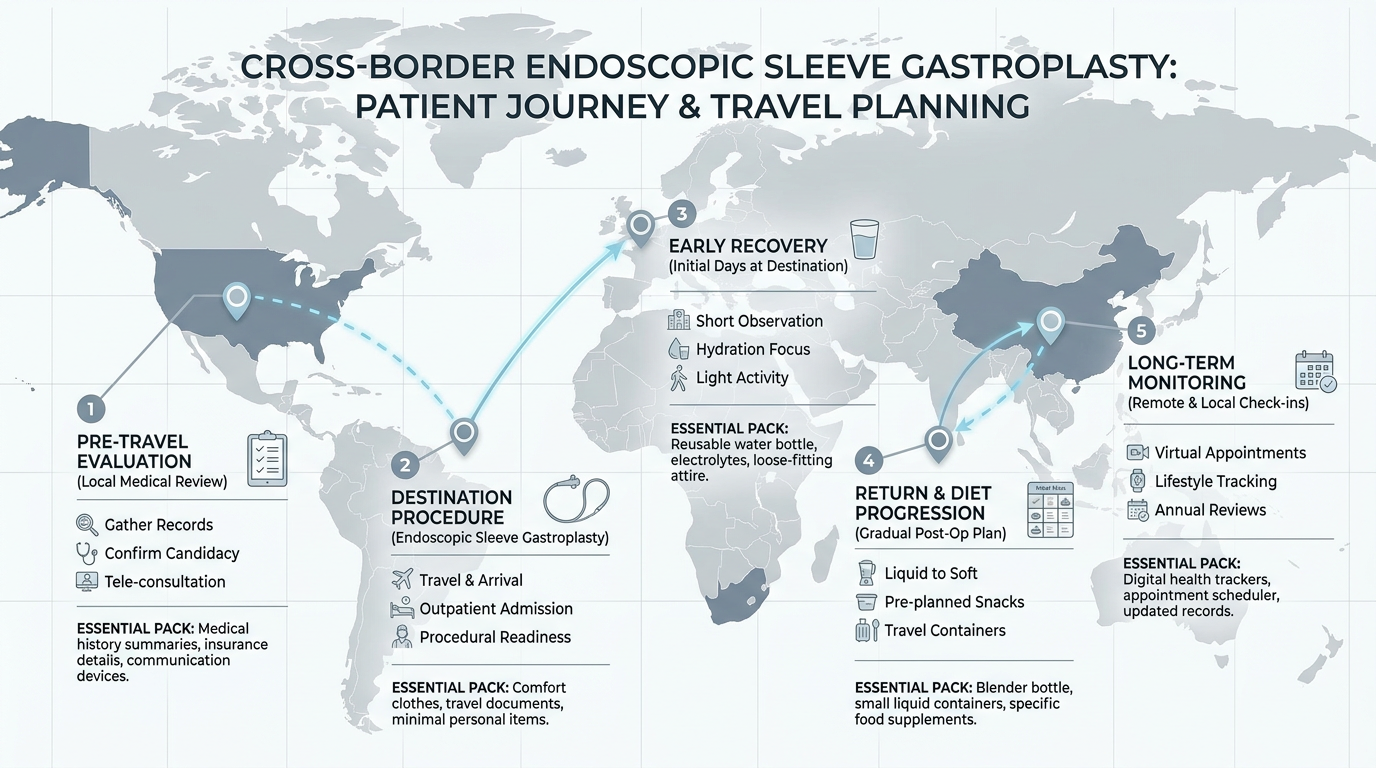
Traveling internationally for ESG can be done thoughtfully, but it requires more than choosing a destination and procedure date. Patients from the US and Canada should consider the full care pathway before, during, and after travel.
Before booking
Request a formal pre-procedure evaluation rather than relying only on a short online form. The clinic should review your medical records, medication list, BMI, weight history, lab results, and relevant diagnoses. If you have diabetes, heart disease, sleep apnea, prior abdominal surgery, liver disease, reflux, or use blood thinners, this review is especially important.
Ask who will perform the procedure and what training they have in bariatric endoscopy. ESG requires specific endoscopic suturing skills. It is reasonable to ask how many ESG procedures the clinician has performed, what complication protocols are in place, and whether the facility can manage emergencies.
Travel timing
Many programs recommend arriving at least one or two days before the procedure for in-person consultation, labs, anesthesia evaluation, and final clearance. Some patients may need more time if additional testing is required.
You should also plan to stay nearby after ESG long enough for early monitoring. The exact timeline varies, but leaving immediately after the procedure may not allow adequate time to identify dehydration, uncontrolled nausea, pain, or other concerns.
Companion and logistics
Consider traveling with a responsible adult who can assist after sedation, help with transportation, and communicate with the clinic if symptoms occur. Plan for a hotel close to the facility, access to clear liquids and prescribed medications, and transportation that does not require you to drive soon after anesthesia.
Records and follow-up at home
Before returning home, request procedure notes, medication instructions, diet progression guidance, lab recommendations, and emergency contact information. Ask whether the clinic will coordinate with your primary care clinician, obesity medicine specialist, dietitian, or gastroenterologist in the US or Canada.
Follow-up is especially important for patients with diabetes, blood pressure medications, sleep apnea, or other chronic conditions. As weight changes and intake decreases, medication needs may change. These adjustments should be supervised by a qualified clinician.
Recovery timeline after ESG
Recovery varies by patient and clinic protocol, but a typical timeline may look like this:
First 24 to 72 hours
Patients often experience nausea, abdominal tightness, cramping, fatigue, and limited fluid tolerance. Hydration is the priority. Prescribed anti-nausea and acid-reducing medications may be used. Severe pain, persistent vomiting, fever, chest pain, black stools, shortness of breath, or inability to keep fluids down should be treated as urgent concerns.
Week 1
Most patients remain on clear liquids or full liquids, depending on the plan. Energy may be low. Walking is usually encouraged, while heavy lifting and strenuous activity are generally avoided. Patients traveling home should discuss flight timing, hydration, and blood clot prevention with the care team.
Weeks 2 to 4
Diet often progresses from liquids to pureed and soft foods. Portion sizes are very small. Patients may begin to feel more comfortable but still need to eat slowly and avoid overeating, which can cause pain or vomiting. Dietitian support can be helpful during this period.
Weeks 4 to 8
Many patients gradually return to more normal daily activities and a structured diet with protein-focused meals. Exercise may increase with clinician approval. This is also when long-term habits begin to matter: meal planning, hydration, sleep, stress management, and activity routines.
Months 3 to 12 and beyond
Weight loss usually occurs gradually. Follow-up visits may monitor nutrition, symptoms, medications, mental health, and weight trajectory. Some patients may benefit from anti-obesity medications, behavioral therapy, or additional support. Long-term maintenance is a continuing process.
Cost context for ESG abroad
The cost of ESG can vary widely based on country, city, facility, clinician expertise, anesthesia, pre-procedure testing, medications, hotel stay, transfers, and follow-up. Some quoted packages include only the procedure, while others include consultation, labs, anesthesia, a short hospital stay, nutrition visits, or remote follow-up.
Patients should ask for an itemized estimate and clarify what is not included. Potential extra costs may include additional testing, treatment of complications, longer hotel stays, flight changes, prescription medications, follow-up care at home, or emergency care after returning.
A lower price does not necessarily mean poor care, and a higher price does not automatically ensure better care. The focus should be on safety, transparency, clinician qualifications, facility standards, and continuity of care.
Insurance coverage for ESG varies and may be limited, particularly for procedures performed outside the patient’s home country. Patients should confirm coverage, reimbursement policies, and what documentation is required before making travel plans.
Questions to ask a clinician before ESG
Use these questions during your consultation:
- Based on my health history and BMI, why do you think ESG is or is not appropriate for me?
- What alternatives should I consider, including lifestyle therapy, medications, or bariatric surgery?
- How many ESG procedures have you performed, and what training do you have in endoscopic suturing?
- What complications have occurred in your program, and how are emergencies managed?
- Will I have an anesthesia evaluation before the procedure?
- What pre-procedure tests are required?
- How long should I stay locally after ESG before flying home?
- What diet progression do you recommend, and will I have access to a dietitian?
- How will you coordinate follow-up with my clinician at home?
- What costs are included in the quote, and what could lead to additional charges?
FAQ about endoscopic sleeve gastroplasty
Is ESG surgery?
ESG is generally described as an endoscopic, non-surgical bariatric procedure because it is performed through the mouth without abdominal incisions and without removing stomach tissue. However, it is still an invasive medical procedure that requires anesthesia or deep sedation and should be performed in an appropriate medical setting.
How much weight can patients lose after ESG?
Weight loss varies. Published studies often report meaningful total body weight loss in appropriately selected patients, but results depend on follow-up, diet, activity, medical conditions, medications, and individual biology. A clinician can discuss realistic expectations based on your situation.
Can ESG be reversed?
ESG does not remove stomach tissue, and sutures may loosen over time. However, patients should not assume it is easily reversible or that anatomy will return exactly to baseline. Any revision or reversal discussion should be handled by a qualified bariatric endoscopist or surgeon.
Is ESG safer than bariatric surgery?
ESG is less invasive than many bariatric surgeries and may have a different risk profile, but safer depends on the patient, procedure, facility, and clinical context. Surgical options may be more appropriate for some patients, especially those needing greater weight loss or specific metabolic effects.
Will ESG improve diabetes or other metabolic conditions?
Some patients may see improvements in blood sugar, blood pressure, cholesterol, sleep apnea symptoms, or fatty liver markers as weight decreases. These improvements are not guaranteed, and medications should only be changed under medical supervision.
How soon can I fly after ESG?
This depends on your medical condition, procedure course, travel distance, and clinician guidance. Many patients are advised to remain near the treating facility for a short observation period before flying. Ask about hydration, walking during travel, and blood clot risk.
What happens if I regain weight after ESG?
Weight regain can happen after any obesity treatment. Options may include nutrition and behavioral support, medication, evaluation of the ESG anatomy, repeat endoscopy, or consideration of bariatric surgery. The right approach depends on the cause and your health profile.
Disclaimer
This article is for general educational purposes only and is not medical advice, diagnosis, or treatment. ESG candidacy, risks, recovery, and expected outcomes vary by individual. Always consult a qualified healthcare professional who can review your medical history and advise you on appropriate options.
Considering ESG abroad?
If you are researching endoscopic sleeve gastroplasty outside the US or Canada, take time to compare programs carefully, ask detailed safety questions, and plan for follow-up before you travel. A qualified bariatric endoscopy team should help you understand not only the procedure itself, but also the long-term care needed to support your health.